
Screenshot-2024-04-29-at-1.28.39 PM

Maintaining Quality and Consistency in Rubber Manufacturing

Whether it is being made into tires, conveyor belts, hoses, cabling, or any other application, the quality of rubber significantly impacts the quality of the final product it is used for. Because of this, rubber manufacturers need to be mindful of every step of the process to ensure ideal, consistent results.


Rubber manufacturing is a complex process that transforms raw materials into a range of products we use daily, from automotive parts to household items. Ensuring the quality and consistency of these rubber products is crucial not only for safety but also for meeting customers’ specific needs and expectations. Here are some measures taken to maintain high standards throughout the process.

Understanding the Raw Materials

To make high-quality rubber, you need to start with high-quality ingredients essential for producing durable and reliable products. Manufacturers carefully select and test raw materials, such as natural rubber and synthetic polymers, to ensure they meet required specifications and performance standards. This initial step is vital to achieving consistent results in the final product.

Precision in Mixing and Compounding

During mixing and compounding, raw materials are blended to create the desired rubber compound – a precise is required to achieve the right balance of ingredients. Reliable equipment and systems ensure accurate measurement and thorough mixing, minimizing variations and inconsistencies.

Careful Monitoring During Processing

Once the rubber compound is ready, it undergoes various processing techniques, such as molding, extrusion, or calendering, to shape it into the final product. Strict quality control measures are implemented throughout these processes to monitor critical parameters like temperature, pressure, and speed. Skilled operators detect deviations and make adjustments to maintain the desired quality and consistency.

Thorough Testing and Inspection

Once the rubber has been processed, rigorous testing and inspection are conducted. Each batch is tested for physical properties, such as tensile strength, elongation, and hardness, as well as for durability and performance in real-world conditions. This thorough testing ensures that the rubber products meet industry standards and customer requirements before they are shipped out.

Constant Improvement

Continuously producing top-quality rubber is an ongoing commitment. Investing in research and development to explore new materials, technologies, and processes can further enhance product composition and performance. Continuous training and education for staff ensure they understand and can apply the latest knowledge and skills to uphold the highest standards in rubber manufacturing.

Maintaining quality and consistency in rubber manufacturing is a multifaceted process that requires attention to detail, expertise, and a commitment to excellence at every stage. By investing in quality control, precision manufacturing techniques, and continuous improvement, rubber manufacturers can deliver products that meet and exceed customer expectations. Whether in the market for automotive parts, industrial components, or consumer goods, knowing the measures taken to ensure quality can help you make informed decisions and choose products that offer durability, reliability, and value for money.

Screenshot-2024-05-16-at-8.58.17 AM-qo8ym4jy89jco96dwus6s27r39jyu1cedo5do2o50w

Exploring Scientific Research on Polymer Durability and its Impact on the Rubber Industry

In the world of rubber manufacturing, durability is the holy grail. The ability of rubber products to withstand wear, tear, and the ravages of time is paramount. Today, cutting-edge research is pushing the boundaries of polymer durability, promising products that last longer and perform better.


The concept of more resilient, long-lasting rubber is poised to enhance the way we build, move, and live with new scientific advancements in the durability of polymers. This article will explore the fascinating world of polymer research and its impact on the rubber industry.

Understanding Polymer Durability

polymer is a large molecule composed of repeating structural units, or monomers, connected by chemical bonds. These long chains of repeating units give polymers their distinctive properties based on the type of molecules they’re made of and how they’re arranged. Rubber is considered an elastomer (“elastic polymer”), characterized by its ability to stretch and return to its original shape with impressive strength and resilience.

However, due to heat, stress, and exposure to chemicals and UV radiation, polymers can break down over time. This degradation leads to reduced product lifespan and performance. Because of this, researchers and manufacturers continually explore ways to modify and improve the polymer structure to enhance rubber’s performance and durability in various applications.

The Quest for Resilience

Rubber manufacturing companies have long sought ways to enhance the durability of their products, and recent research efforts are focused on developing innovative techniques to fortify polymers. Here are some notable approaches:

Cross-Linking

Cross-links are ionic or covalent bonds connecting segments from separate polymer chains via chemical reactions. This creates a strengthened network of polymers, improving thermal stability and chemical resistance.

The most common form of cross-linking is vulcanization using sulfur, which toughens rubber, improves tensile strength, and protects against abrasion. Some newer techniques use peroxide for better compression set percentages and low-temperature flexibility. By combining these types of elements, scientists have been able to achieve a variety of properties based on the desired applications.

Researchers are investigating additional methods to increase cross-linking within polymers to further improve this process’s effectiveness. A recent study by a team of chemists from MIT and Duke University found that using weaker links to connect chains in random places significantly improved tear strength due to cracks needing to travel through a longer path to break the weaker links while avoiding the stronger ones.

Nanotechnology

Utilizing nanomaterials is another promising avenue that involves manipulating matter at the nanoscale. Researchers are experimenting with incorporating nanoparticles into rubber compounds to reinforce polymer matrices with cross-linking agents.

During this process, the nanoparticles are dispersed within the polymer, penetrating the spaces between chains and acting as reinforcements. The introduction of nanoparticles strengthens the polymer and enhances its properties, including increased tensile strength and improved resistance to factors like heat and chemicals.

Bio-Based Polymers

Sustainable rubber is rising, and researchers have been exploring bio-based polymers derived from renewable sources, a significant departure from traditional petroleum-based polymers. These environmentally-friendly options are gaining attention for their potential to create durable, eco-conscious rubber products.

The key to improved durability with bio-based polymers lies in their unique molecular structures, which have intrinsic self-healing mechanisms that a small amount of energy can activate. When exposed to chemical and physical forces, local growth occurs within the polymeric chains, repairing the material’s structure and restoring its functional properties.

While bio-based polymers have not yet become the most effective solution to increased durability, scientists continue developing them to use them as a more environmentally-conscious option. As of right now, they appear to have a strong potential for significantly improving the lifespan of products and reducing waste.

Applications and Impact

The impact of enhanced polymer durability can make a notable impact in numerous applications extending across various industries such as:

1. Automotive: Longer-lasting rubber components like hoses, gaskets, and seals mean reduced vehicle maintenance and replacement costs. Durable, well-functioning parts also ensure the safety of the passengers, especially when it comes to tires.

2. Construction: Rubber is often used for roofing, sealing, and insulation due to its ability to withstand harsh environmental conditions. Durable rubber helps maintain consistent home temperatures, absorb vibrations and sound, and effectively protect piping and cables.

3. Aerospace and Aviation: Aircraft rely on rubber for various components, such as hydraulic actuators, air valves, and auxiliary power units, mainly due to its ability to withstand extreme temperatures and aggressive chemicals. Improved durability ensures safer and more reliable aircraft.

4. Medical: In the healthcare sector, durable rubber is essential for medical accessories and devices that maintain performance and sterility over time. Reliable protective wearables like gloves and masks help to maintain cleanliness and reduce the risk of disease transmission. At the same time, specialized equipment like rubber bladders, catheters, and tubes must dependably be able to hold their contents to avoid potential contamination.

The quest for durability in rubber manufacturing is an ongoing journey marked by scientific innovation and tireless research. The efforts to fortify polymers open doors to a new era of rubber products that endure and excel in performance. As we witness the collaboration of cutting-edge science and the rubber industry, we can anticipate a future where rubber products last longer, perform better, and continue to be the backbone of countless applications in our modern world.

13-qfgffb9yuxyfd0ifdk3c4va5r3auw4bxrgn6k4206o

A Guide to Natural vs. Synthetic Rubber

While you probably use products just about every day that include rubber, you might not have realized that different kinds come from different sources. Natural and synthetic rubbers each have their unique properties based on how they are processed and are both useful for different applications.


Rubber, the versatile material that bounces, stretches, and provides grip, is essential to our daily lives. Whether it’s the tires on our cars or the bands that keep things together, rubber plays a crucial role. But did you know that not all rubber is created equally? There are two main types with different characteristics: natural rubber and synthetic rubber.

Natural Rubber

Sourcing and Production

Natural rubber, as the name suggests, is derived from natural sources – rubber trees, primarily the Hevea brasiliensis species. Some of the earliest evidence of its use is from Native Americans thousands of years ago, followed by the first major production efforts beginning in the 18th century. The manufacturing process begins with tapping the trees and collecting the sap, which contains latex.

The latex is then transported to a processing facility, where it is mixed with acid to induce coagulation. Additives such as carbon black and silica may also be included based on the specific properties desired. Once the clumps are formed, they are rolled into a flat sheet and dried. The rubber is then vulcanized, which involves heating the material with chemicals and creating cross-links between the polymer chains, thus improving strength, elasticity, and resistance to heat, chemicals, and wear.

Properties and Advantages

Natural rubber tends to be quite durable and resilient, with a unique set of chemical and physical traits. Some of its main properties include:

  1. Excellent Elasticity: Natural rubber offers exceptional stretchability and rebound. It can stretch many times its length and return to its original shape, making it ideal for applications that require strength and flexibility.
  2. Low Heat Generation: Natural rubber generates less heat during rolling and friction, contributing to better performance and longevity.
  3. Biodegradability: Natural rubber is biodegradable, which means it can break down naturally over time, reducing environmental impact.
  4. Cold Resistant: Natural rubber maintains flexibility in a wide range of temperatures and is resistant to breaking between -58 and 212 degrees F.
  5. High Durability: Natural rubber is impressively strong, and does not easily get cut, chipped, or torn. It is resistant to repeated stress, wear, and abrasion.

Uses and Applications

Natural rubber is widely used in a variety of industries. It’s favored in situations where high resilience and durability are required. A few of its main applications are:

  1. Tire Manufacturing: Because of its excellent elasticity, resilience, and low heat buildup during rolling, natural rubber is a vital component in tire manufacturing. It provides grip, durability, and the ability to absorb shocks, making it ideal for off-road automotive, construction, aerospace, and other applications that require the ability to withstand harsh conditions.
  2. Flooring: Its water and wear resistance make natural rubber an excellent option for flooring and fatigue mats in gyms, animal shelters, and commercial kitchens where padding and anti-slip surfaces are needed.
  3. Clothing: The flexibility, comfort, and waterproof qualities of natural rubber make it a preferred choice for the production of various types of footwear, including sneakers, rain boots, and flip-flops, as well as other types of clothing that require stretch, such as waistbands and wetsuits.
  4. Latex Products: Natural rubber latex can make gloves, balloons, pencil erasers, and paint. Its natural stretchiness and flexibility make it well-suited for products that require a significant amount of elasticity.
  5. Industrial and Mechanical Goods: Natural rubber is used to manufacture conveyor belts, gaskets, seals, hoses, and various industrial goods. Its resilience and durability are valuable in these applications.

Synthetic Rubber

Sourcing and Production

Synthetic rubber is a man-made creation, invented during WWII when the United States was cut off from international natural rubber supply lines and needed an effective alternative to continue manufacturing essential military supplies. It is produced through chemical processes by polymerizing various petrochemical compounds derived from crude oil and natural gas. The compounds undergo a chemical process known as polymerization, where individual molecules (monomers) are chemically bonded to form long chains or networks of polymer molecules.

Various additives, such as antioxidants, accelerators, and curing agents, are mixed with the polymer to enhance specific properties like heat resistance, durability, and curing characteristics. Fillers like carbon black or silica may also be added to improve strength and wear resistance. The rubber is then cured via vulcanization.

Properties and Advantages

The versatility of synthetic rubber lies in the ability to customize its properties. Some are designed for high-temperature resistance, while others prioritize oil resistance, chemical resistance, or flexibility. Some of the main advantages of this type of rubber include:

  1. Versatility: Different types of synthetic rubber can be formulated for particular properties, such as oil resistance, heat resistance, or chemical resistance, making it suitable for a wide range of industrial applications.
  2. Damage Resistance: Synthetic rubber is highly resistant to chemicals, oxidation, and abrasion. This means it does not deteriorate easily and has excellent longevity.
  3. Weather Resistance: Synthetic rubber can withstand extreme temperatures, especially high heat, and is not heavily affected by outdoor conditions such as sunlight, and ozone exposure, making it less susceptible to degradation.
  4. Adhesion: Some synthetic rubbers can bond well with other materials, allowing them to be used as adhesives and sealants to join various components. Varieties with a tacky surface are excellent for applications where grip is essential.
  5. Tear Resistance: Synthetic rubber can be stretched twice its length without deformity. It can handle significant stress and immediately return to its original shape and size without tearing or permanent damage.

Uses and Applications

Synthetic rubber offers a wide range of applications due to its versatility and ability to be tailored for specific purposes. It can have a variety of uses, such as:

  1. Tire Manufacturing: Synthetic rubber is a key component in passenger tire manufacturing. Different synthetic polymers are blended to achieve the desired balance of properties such as tread wear resistance, traction, and impermeability. 
  2. Automotive Components: It is also used in various other automotive components, including engine bearings, clutches, seals, and hoses. Synthetic rubber’s durability and resistance to automotive fluids make it ideal for these applications.
  3. Industrial Products: Synthetic rubber is used in cable installation, belts, gaskets, and rollers in machinery. Its resistance to abrasion, chemicals, and extreme temperatures makes it suitable for industrial use.
  4. Commercial Goods: From wearable items like hair ties, boots, and raincoats to household items such as dishwashing gloves, jar seals, and garden tools, synthetic rubber can be found in many items people use every day due to its impressive versatility.
  5. Medical and Laboratory Equipment: Due to its high durability and resistance to chemicals, synthetic rubber is excellent for lab flask corks, fatigue mats, and prosthetics. 

Outside of their functional properties and applications, one of the biggest deciding factors when choosing between natural and synthetic rubber is typically the cost. The latter often tends to be cheaper, which makes it the best option when price point is critical. However, this is not always the case, as both types are subject to fluctuations in market rates of necessary ingredients, which can change due to a variety of factors.

In the world of rubber manufacturing, natural and synthetic rubber have unique roles and advantages. Natural rubber shines in its eco-friendliness and exceptional elasticity, making it a top choice for tires and various consumer products. On the other hand, synthetic rubber offers versatility, allowing engineers to fine-tune properties for specific needs, whether heat resistance, chemical resistance, or durability. Together, both of these types of rubber keep our world rolling, bouncing, and gripping, meeting many significant industrial and consumer demands.

2-qog5u44dssbpyxxznnp2i609oddgaiou2q0vqa1egg

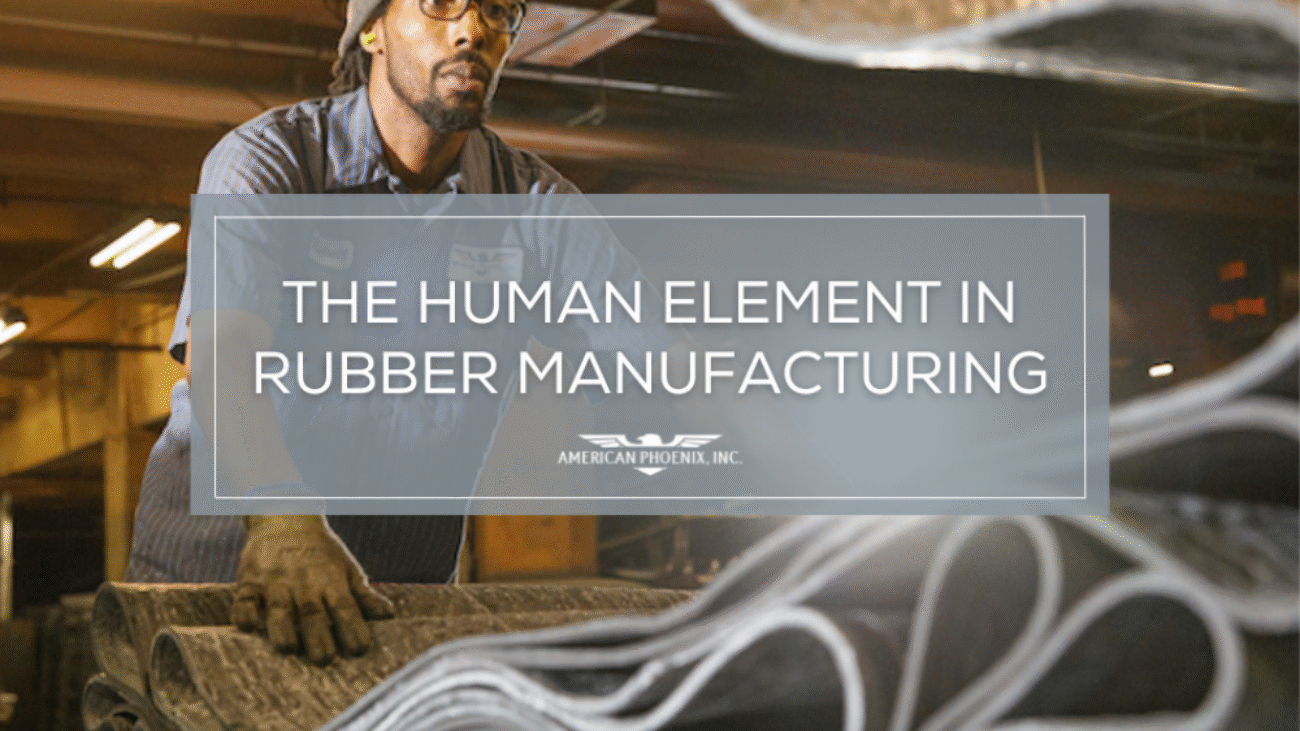
The Human Element of Rubber Manufacturing

At API, our skilled team takes pride in delivering high-quality rubber. Our commitment to customer satisfaction, quality, and innovation are the cornerstones of our success. We know that even though our machines do a lot of work, our business wouldn’t be possible without our people, who play a vital role in the manufacturing process. Before the rubber meets the road, it passes through our hands.


With its sophisticated machinery and intricate processes, rubber manufacturing might seem like a highly automated industry. While those elements play a crucial role, there’s another essential component that often goes unnoticed—the people. Behind every product lies a touch of human expertise, dedication, and craftsmanship. Undoubtedly, people contribute the most to creating an excellent final product.

The Art of Mixing

At the heart of rubber manufacturing is the blending of raw materials to create the perfect rubber compound. While machines handle the bulk of the mixing process, skilled technicians oversee and adjust the recipes to achieve the desired consistency and quality. Their expertise in understanding the nuances of different rubber types and additives is essential in creating compounds that meet specific performance requirements.

Craftsmanship in Molding

Molding is where rubber takes shape, transforming from raw material to the final product. Operators use their keen eye for detail and hands-on skills to ensure that each piece meets specifications. Whether for automotive parts, industrial components, or consumer goods, the precision and care taken during molding significantly impact the product’s functionality and durability.

Ensuring Optimal Quality

Quality control is an integral part of rubber manufacturing, and the humans behind it are crucial to ensuring the final product is satisfactory. Meticulous testing ensures that each batch of rubber products meets strict quality standards and customer expectations. Trained inspectors examine each batch of rubber products, checking for consistency, durability, and performance. Their attention to detail helps identify any irregularities or defects, ensuring that only the best products make it to the market. Their vigilance and commitment to quality assurance help maintain the company’s reputation and build customer trust.

Innovation and Problem-Solving

People who work in rubber manufacturing are not just operators or technicians but also innovators and problem solvers. Facing challenges and seeking innovative solutions is part of their daily work. They have an intimate knowledge of the materials, processes, and equipment involved, allowing them to troubleshoot issues, optimize performance, and ensure quality at every step of the way. Whether improving production efficiency, developing new formulations, or troubleshooting issues, their creativity and ingenuity drive continuous improvement and propel the industry forward.

Building Relationships

Beyond the production floor, people in other roles around the plant are crucial in building and nurturing relationships with customers and partners. Sales representatives, customer service agents, and support staff are vital in understanding customer requirements, addressing concerns, and ensuring a seamless experience from inquiry to delivery. Their knowledge, professionalism, and commitment to customer satisfaction foster a positive experience that fosters loyalty and long-term partnerships. In a world where business is increasingly digital, the human touch remains irreplaceable in establishing trust and understanding customer needs.

While machines and technology are indispensable in modern rubber manufacturing, it’s the humans who breathe life into the process. This industry would not exist without the invaluable knowledge and skills of its dedicated people. From craftsmanship and quality control to innovation and customer engagement, humans are the driving forces behind the quality of production and the core of everything we do.